The armudu glass: the secret of a slender waist
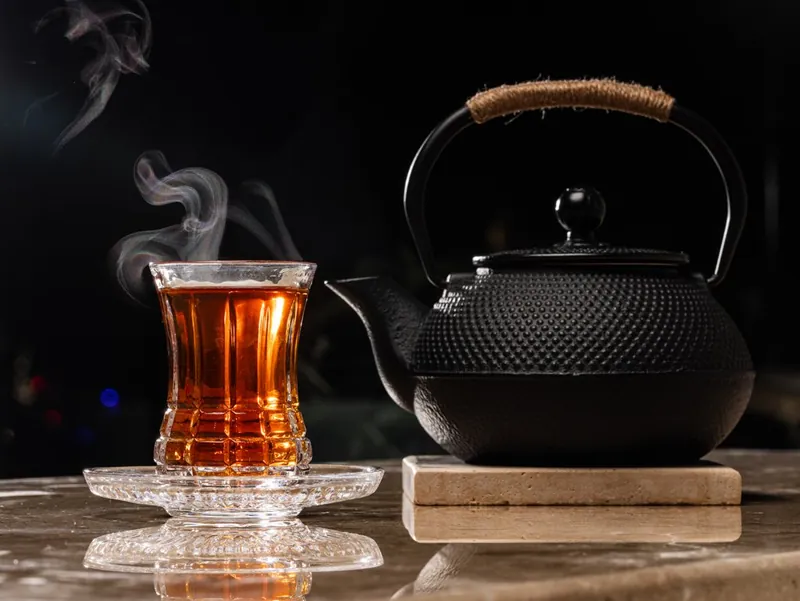
Azerbaijani tea is recognised first not by its taste, but by its shape: a glass with a slender waist, an open rim and a generous base.
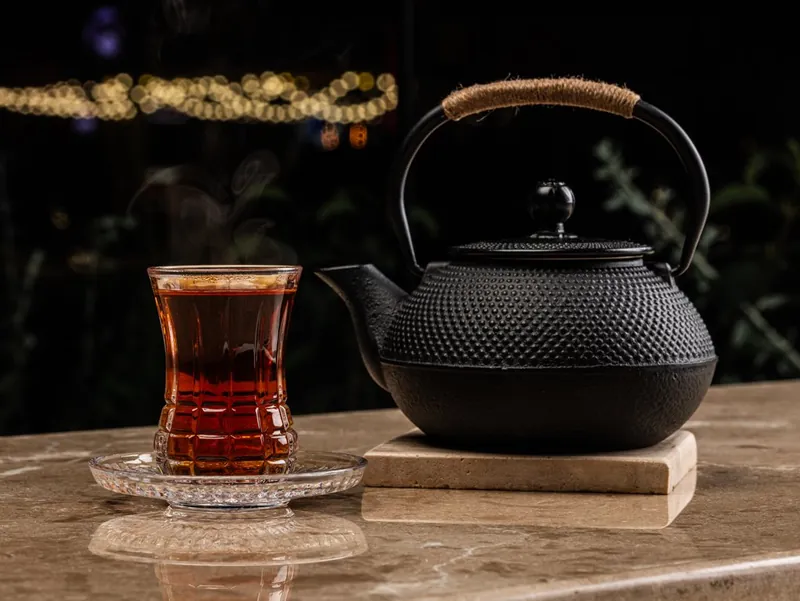
The word armudu means "pear-shaped". The glass is also known as "boğmalı", the narrow-waisted one: slim in the middle, wider at the rim and the base. Its silhouette is recognisable at a glance, yet the form was never meant for beauty alone.
Why the shape
By tradition, the narrow waist helps keep the hottest tea in the lower part of the glass. The tea at the bottom stays warm for longer, while the upper part settles to a pleasant temperature for the lips. The open rim gives the fingers a secure, elegant hold.
The armudu is, in other words, made for unhurried tea, sip by sip. The conversation lingers; the tea does not go cold.
The place for the lips
An armudu is never filled to the brim. A gap of a centimetre or two is always left at the top, known as "dodaq yeri", the place for the lips. It is a matter of comfort and of manners alike: tea is offered with restraint, never spilling over.
Glass, crystal, silver
Armudu glasses are made of glass, crystal, porcelain, faience and, on occasion, silver. Clear glass has a particular virtue: it shows the bright amber-red colour of well-brewed tea. In Azerbaijan, good tea is judged by its colour first.
The glass is served on a small saucer, which protects the table and turns every lift and return of the glass into a quiet ritual.
A heritage of humanity
In 2022, the tea culture of Azerbaijan and Türkiye was inscribed on UNESCO's Representative List of the Intangible Cultural Heritage of Humanity. The description of the element makes particular mention of tea served fresh and hot in pear-shaped glasses.
At LABLABI, every tea arrives in an armudu glass on its saucer, with the brew in its own teapot. As one glass empties, the next is poured, always leaving the place for the lips.